

WHY THE CORRECT TECHNIQUE AND CHOICE OF LANDING NET WILL SEE YOUR CATCHES INCREASE
The landing net is, without doubt, one of the most undervalued tools in sea angling. Few anglers fishing from the shore seem to use them, and while a net should be a standard piece of kit for boat fishing, there are plenty of occasions I’ve experienced when a net is available but not used. Why is this, and why do we need landing nets in the first place?
When I asked some friends from the USA about this, their answer was to quickly land fish and assist in their survival after a fast net, catch, and release. That makes perfect sense for species they typically encounter, like tarpon, large groupers, and some smaller tuna species, which can literally cook themselves to death if the fight lasts too long. However, here in the UK, I don’t think the same applies to the same extent. Mostly, fish caught from the shore—whether from a beach, rock mark, or man-made structure — are brought to hand. The only time the survival of released fish really matters is the many occasions I’ve seen, both in person and online, anglers dragging hooked fish up and across rocks to get them clear of the water and prevent them from throwing the hook and escaping. Dragging a bass, or any other fish, across sharp, barnacle-covered rocks is reckless if your aim is to release it ‘unharmed’, especially when you consider that pike anglers lay their fish on specially designed mats with soft pillows and gently tuck them in before releasing.
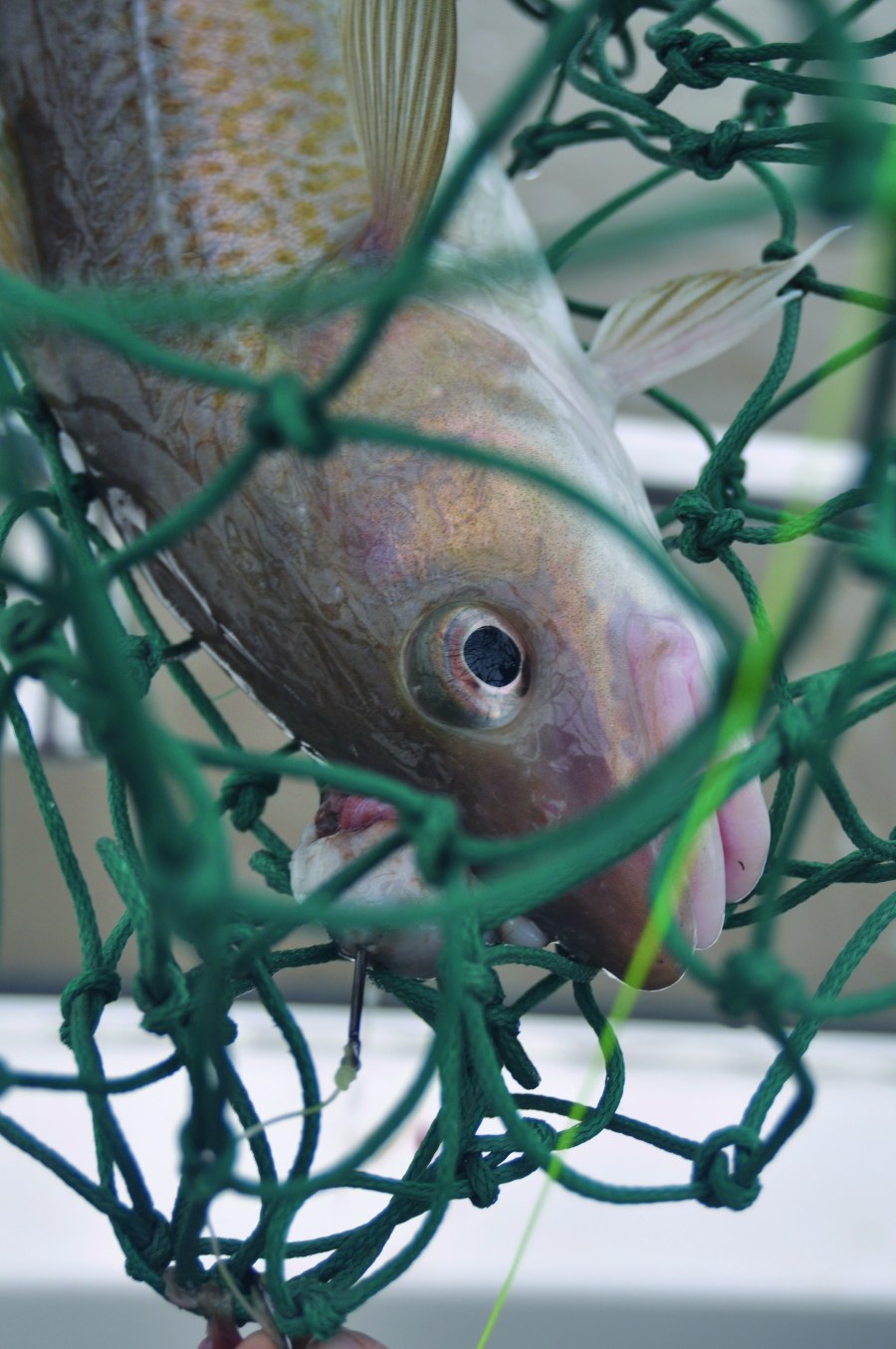
But the main reason is to land a good fish successfully. No net means lifting a fish with the rod and risking the rod tip breaking or hand-lining the fish in, risking the line breaking, the hook bending, or the fish throwing the hook before either of these happen. Nine out of ten fish (my own statistics!) are lost at an angler’s feet or by the side of the boat as the fish circles or dives and the line pings like cotton thread as the braid, under tension, hits a barnacle, or tangles with other anglers’ lines by the side of the boat. At the same time, someone faffs about, not quite knowing how to bring the fish aboard or get low enough to release it in the water.
TECHNIQUE
Route one to losing friends and creating an atmosphere that you could cut with a knife is chasing a fellow angler’s fish with a net. We’ve all seen it, and many of you will have done it. Flailing the net around at a fish like you are playing a game of whack-a-mole. Inevitably, the line or hook gets fouled in the net, and the hook is thrown or the line breaks, causing the fish to be lost. If you are going to net someone else’s fish, do it properly or leave it to someone who knows what they’re doing.
THINGS TO REMEMBER
Firstly, once the fish is on the surface, it can only go one way – down. Secondly, apart from conger eels, fish can’t swim backwards. The correct technique for using a landing net is to submerge it and raise the rim around the fish as it swims towards you. This way, whether it freaks out and dives down or tries to sprint forward, you’ve got it covered. The exception to this rule is when fishing in strong tides and currents. In this case, I’ve always found it most effective to use the tide to your advantage. Submerge the net behind the fish, drop the rod tip back or release some line, and let the current guide the fish back into the waiting net. Simple!
But before the net even sees the water, you need to have a mental plan for how you’ll land the fish and communicate this to your fellow anglers or skipper so everyone knows their role when the time comes. This may involve bringing in all other lines to prevent tangling and stowing the net somewhere where everyone knows its location, how to access it, and, essentially, how to use it. It might have an extendable handle or folding mechanism. You don’t want to be giving instructions on how to extend the handle while your fish of a lifetime thrashes impatiently at the side of the boat!
Assuming everyone is up to speed the final essential tip to technique is timing. Wait until the very last second until you deploy the net. A good technique should see the net in the water for no more than a few seconds. Deploying the net too early will spook the fish and make it almost impossible to manoeuvre it into position when you need it. You may need to be patient and bide for the right moment. Alternatively, the ideal time could be the second the fish hits the surface. It’s a judgement call you must make.
Once the fish is in the net there is almost no excuse whatsoever for failing to land it now. However, there are a few other considerations to take into account in order to avoid this kind of epic failure that the angler with the fish on the line will find unforgivable.
Lift the rim of the net above the water but keep the fish in the net below the water. This will keep the fish calm but prevent it from slipping the net if it struggles. Slide the net towards you rather than lifting it vertically. Don’t underestimate the weight of the fish being brought up vertically from an extended handle. With the net at the side of the boat it’s often helpful to bring big fish aboard by holding the rim of the net rather than the handle. This makes it easier and helps prevent the handle or rim from breaking under the weight.
Don’t attempt to net the fish with your body and arms fully extended. At this point you have nowhere to go and may end up losing the net or losing balance and taking an early saltwater bath. This comes back to timing. Wait until the fish is in the zone where it’s close enough to land comfortably or without risk to yourself or others.
NET CHOICE
Choice of net is really determined by two factors: size and species of target fish, and size and space of your boat. A typical small fishing boat of 16ft can easily become clogged with unnecessary gear and a large net will inevitably end up getting in the way and becoming a nuisance. That being said, how are you going to fit tope or conger in a small net you use to land bream and bass? Similarly, what is the mesh size of the net? Even a nice bream may slip through a large-meshed net used for landing tope and big rays. Match the net with your target species. This may involve having more than one net for different applications. For small boats nets with extendable handles are incredibly useful. You can even find nets with folding rims which pack down even more efficiently and can be stowed in a locker when not in use.
As well as mesh side the net material is also an important consideration. Rubber coated mesh nets are incredibly helpful in preventing hooks becoming tangled in the net as well as protecting the slime coating on the skin of fish. Tangled hooks can be a real nuisance which can not only lose you fish but cut down on your fishing time as you untangle the barb from the net – particularly when on a good drift when you want to get your lure back in the water as quickly as possible! Sometimes this may involve having to cut the hook out which of course then damages the integrity of the net. It’s not just the hook in the fish which gets tangled either. I’ve lost count of the number of times a hook, or hooks, from rigged rods stowed next to the waiting net have become entangled and need to be removed just as you need the net! For this reason alone I’ve switched from using treble hooks to single hooks on jigs and lures.
As with anything to do with sea angling, gear that’s designed to cope with being eaten by corrosive saltwater is a good idea. Seized up and rusted mechanisms on folding nets designed for catching salmon or trout in freshwater could see you spending an hour or more spraying it in vain with WD40 before jettisoning the damned thing into the sea, along with a tirage of expletives. I know I have!
SEA ANGLER’S CHOICE OF LANDING NETS
1. TOP CHOICE FOR SAVING SPACE:

FRABILL FOLDING CONSERVATION NET
Frabill is an American brand with products available to import from the US via Amazon. The folding conservation net not only has an extendable handle but also features a unique design that allows the hoop to fold in half, making it ideal for storing in small spaces like boats and kayaks. In addition, it features knotless rubber mesh to protect fish and is available in a long-handled version as well as two hoop sizes and three different net depths.
RRP: $79.99-$139.99
2. TOP CHOICE FOR PIER & ROCK FISHING
DAIWA TELESCOPIC MOBILE LANDING NET
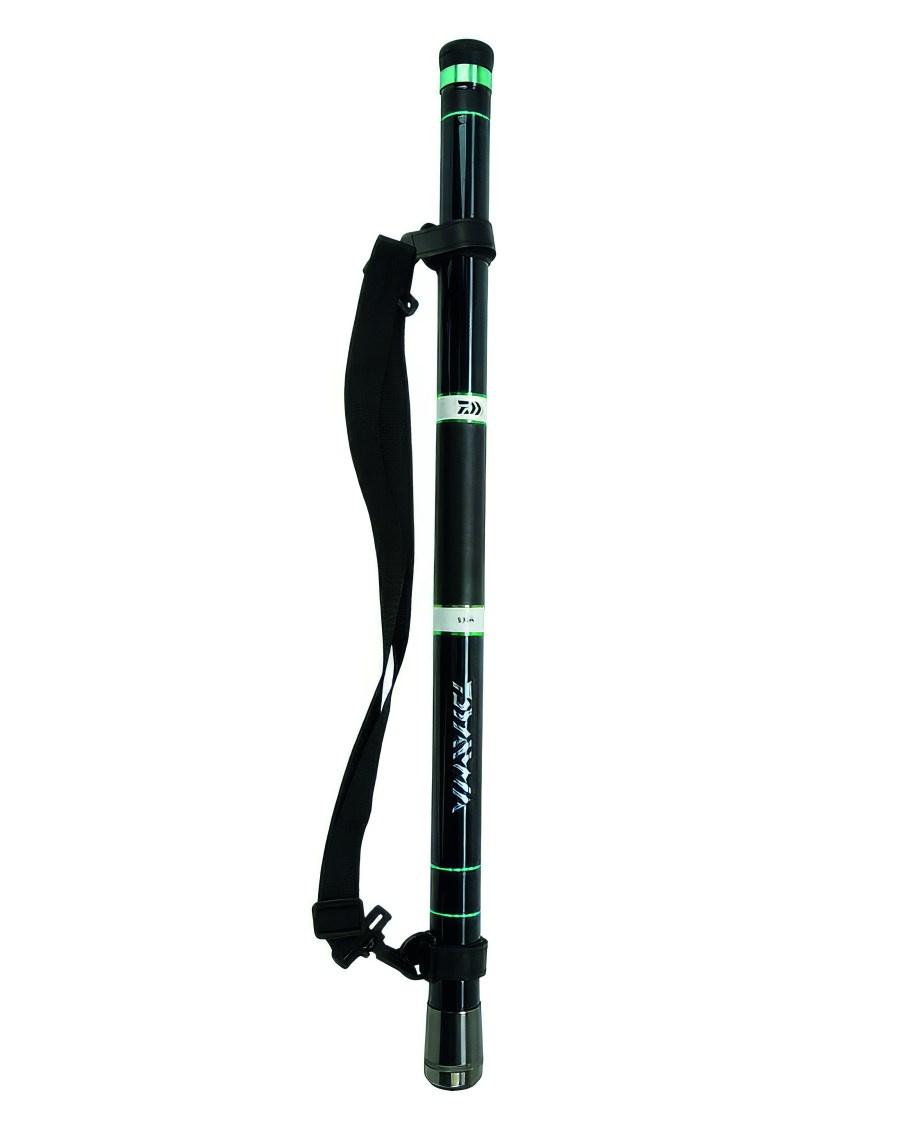
This amazing telescopic net handle extends to an astonishing 5.9 metres but packs down to just 72cm. It’s ideal when fishing from high platforms when the water level is too far for most conventional nets. It’s portable, coming with a carrying handle and is an excellent alternative to a drop net. The handle is sold separately to the net but pairs with Daiwa’s Latex landing net which comes in three different sizes.
RRP (handle and net): from 126.99
3. TOP CHOICE FOR NET ON A BUDGET
LINEAFFE BOAT NET
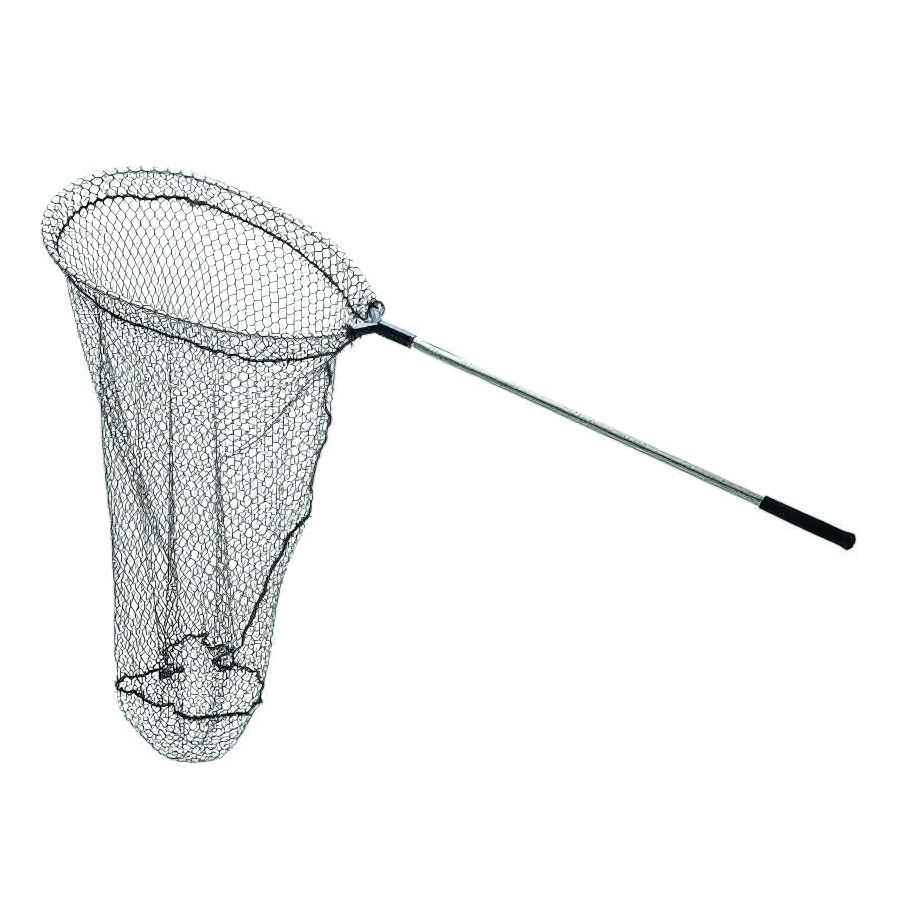
The Lineaeffe boat net is a solid and dependable no frills net that won’l’t break the bank or let you down. With a long reach and a deep net, it’s ideal for scooping up big specimens. The solid frame and handle are rust-proof, making it a great option for boat anglers targeting bigger species who want a cheap yet reliable net that gets the job done.
RRP: £32.99
https://www.fishingmegastore.com
4. TOP CHOICE FOR LURE FISHING
SAVAGE GEAR PRO FINEZZE RUBBER FLOATING NET
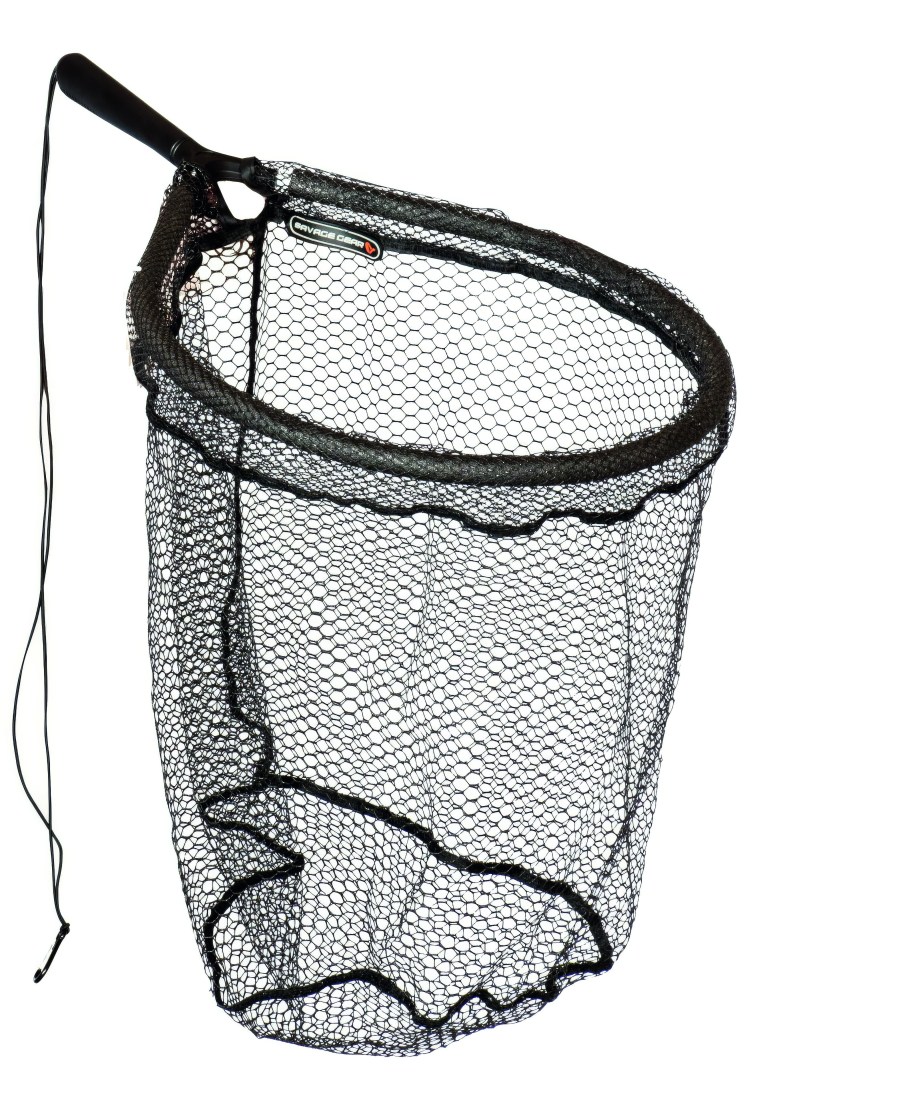
The Pro Finezze scoop-style net is ideal for roving lure anglers and for wading. The short handled rubber net protects fish and is ideal for catch & release. The rim is rubber coated and protected from wear and tear while the lanyard allows the net to be attached to your jacket or vest and is easily accessible with one hand while playing a fish. Available in two sizes it’s also great value.
RRP: £29.99-£34.99
https://www.savagegear.com/?srsltid=AfmBOopgNxWPk-fd04_5FtTLw2UxlEFZjzHkwTGOV0f1h1gLpmcXuSvR
5. TOP CHOICE FOR ALL-ROUND NET
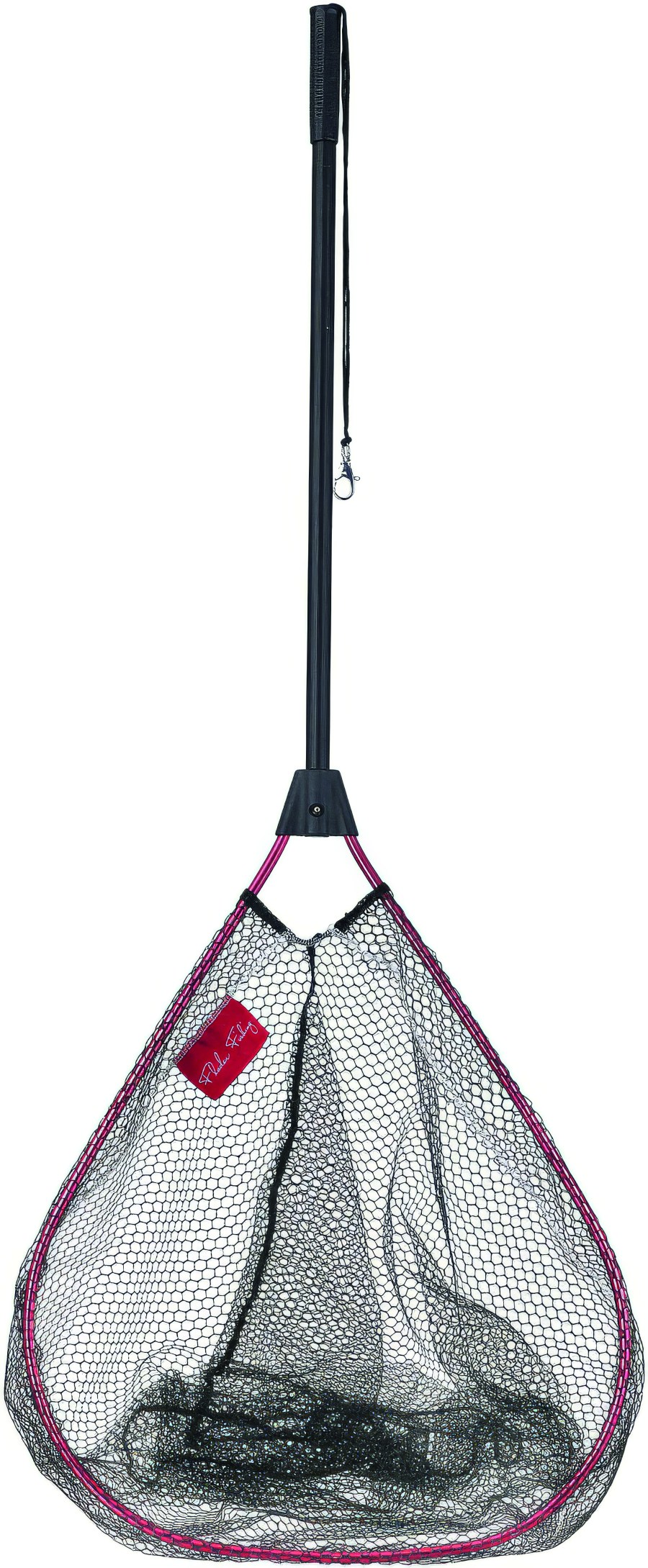
FLADEN MAXXIMUS ALLROUND RUBBER MESH LANDING NET
Coming in two sizes this rubber meshed net from Swedish brand Fladen is wide and deep ensuring all catches can be netted with confidence. With a folding handle it’s a great choice whether fishing from the shore or from a boat.
RRP: £30.99-32.99