

Big lures getting ignored? Spring bass often want the smallest mouthfuls going. Here’s how downsizing your tackle and sharpening your presentation can turn frustrating sightings into savage takes
On a warm spring evening, I spot four dark backs stalking the shallows in front of me. The water is no more than a metre deep. I angle my body so not to leave a shadow from the streetlight above me. I can feel the adrenaline building, it’s working its way up my body as I pick my spot to cast. The anglers who have fished next to me have given up; their large, aggressive lures have been repeatedly ignored. I try something different, flicking a tiny prawn imitation lure beyond the bass and let it sink onto the sand. With two flicks of my ultralight rod tip, I activate the soft plastic, darting it from side to side, then I feel it, the smack of the take, and all hell breaks loose.
I am no bass fanatic; I don’t spend all year chasing my personal best or obsess over the tiny details that can make the difference in catching that trophy fish. Instead, I focus on the variety of species my LRF (Light Rock Fishing) rod can catch. Bass are welcome, but don’t dominate my angling, yet in spring, when many other predators are yet to arrive, they get my full attention, and my smaller lures really come into their own.
MATCH THE HATCH
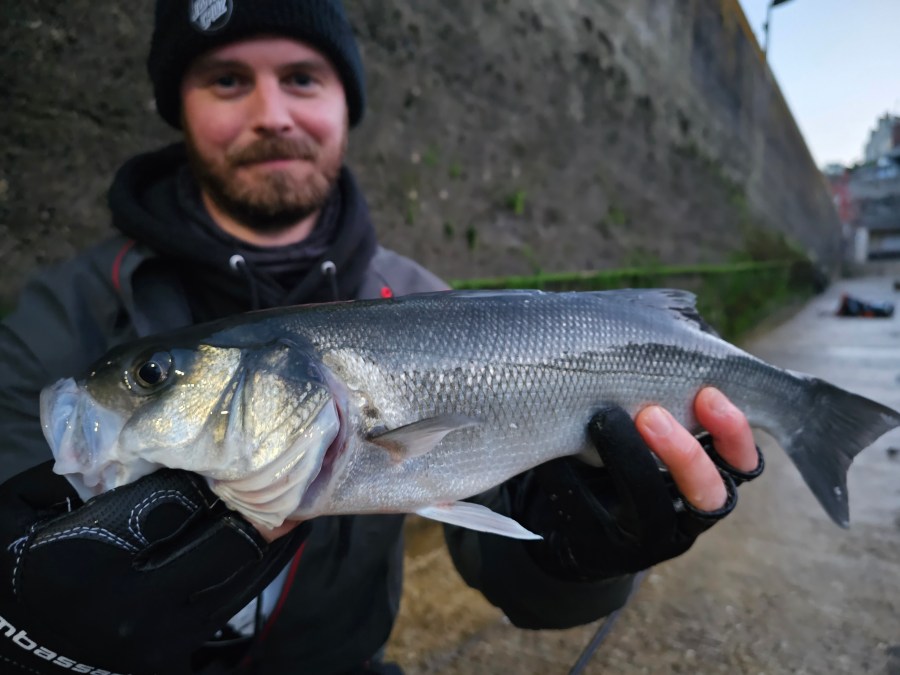
It is no secret that early-season bass are often laser-focused on small prey. The masses of small sandeels that bloom in the warming spring seas provide a banquet for these silver predators, looking to pile on the weight for spawning and the year of hunting ahead. In some areas of the coast at this time, you can be lucky enough to encounter large numbers of fish from 30-50cm. These fish are ideal light rod targets, able to give you a proper run around, without being impossible to land. But they can prove frustrating, happily ignoring your larger lures, so this is how I target them with great success on light tackle and small lures.
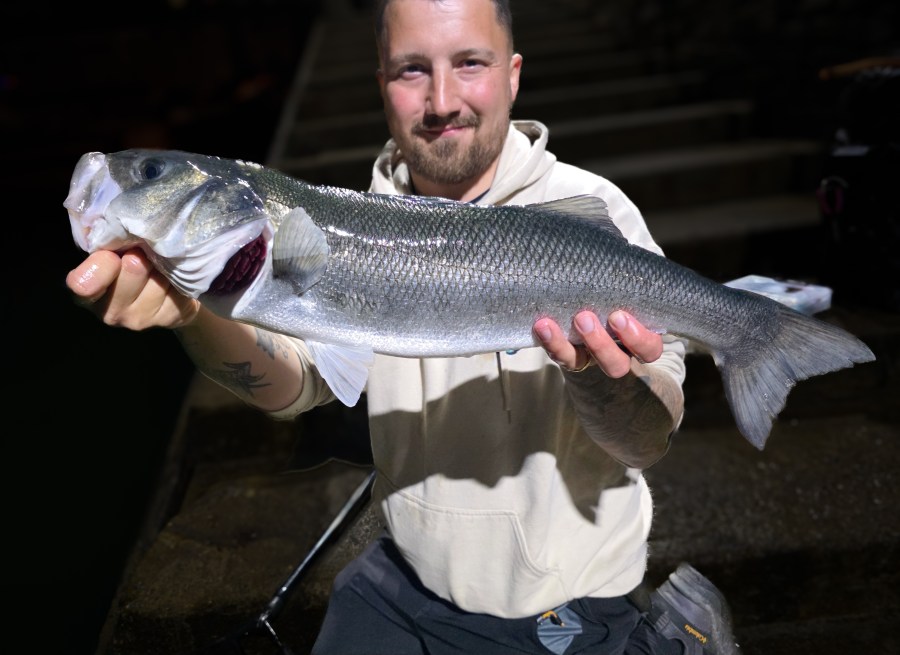
In previous years, the early-season bass on the south coast were fairly small, fun on really light tackle but not much of a challenge to land. That changed in 2025 as the average size seemed to jump and it wasn’t uncommon to see lots of adult fish cruising in the cool waters. This could be down to fish spawning earlier in warming seas, or just a benefit of stricter bass controls taking effect. Either way, I was astonished at the consistently large specimens I witnessed and caught, and my more bass-obsessed angling friends saw that continue throughout the year.
CHOOSING THE RIGHT SMALL LURES
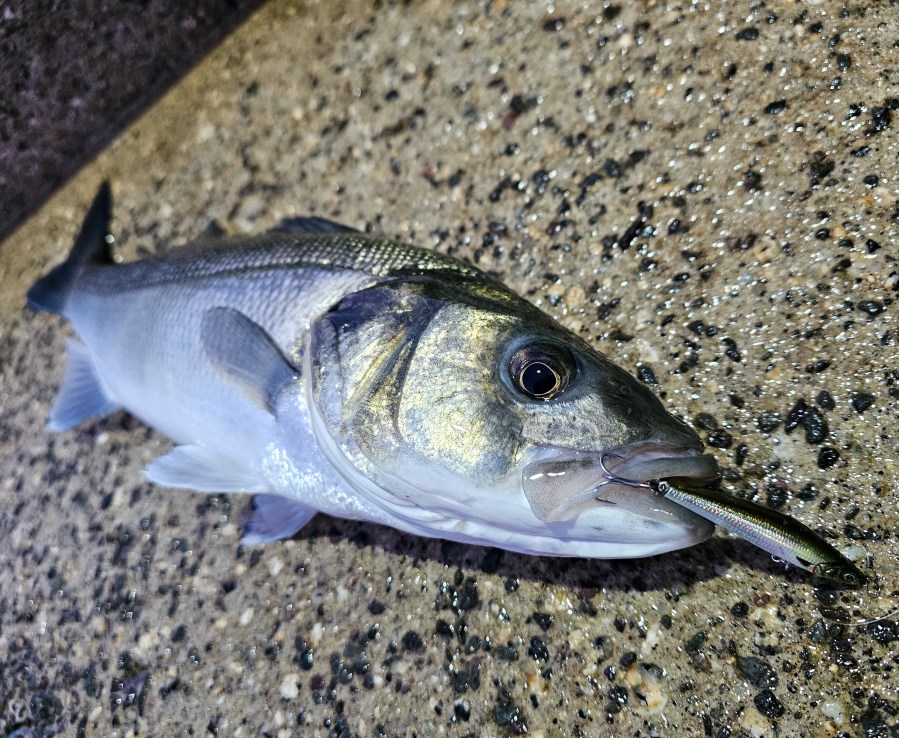
These larger bass have small sandeels on the menu, and to catch them we have to imitate the eels with our lure choice. We have never been so spoiled in that department. Almost every saltwater lure brand offers a sandeel imitation. I will pick my favourites, but there will be many others I have missed or not used enough to discuss. Because we need our lures to be small – ideally under 10cm, as we know that is what early-season bass want – the 4.1g and 8.5g Major Craft Eely Shads are my choice. The 5g and 7g Westin Sandy Andys are also fantastic for this purpose. I like the lures to be light enough to work slowly through the water column, but with a darting-shaped head so I can quickly whip the rod tip to get the bass chasing. Both these lures match the hatch while offering excellent usability.
THE DARTING JIGHEAD
You don’t need to buy exact sandeel copies, of course. Any slim, soft plastic can double as one if rigged correctly. One of my favourites is the Keitech Easy Shaker in 2.5 inch, a very simple ribbed worm-style lure that can easily imitate a small sandeel or baitfish. It’s how you rig this style of lure that makes a big difference. They are effective on a very light jighead or even dropshot for suspended fishing, but they really come into their own on a darting jighead.
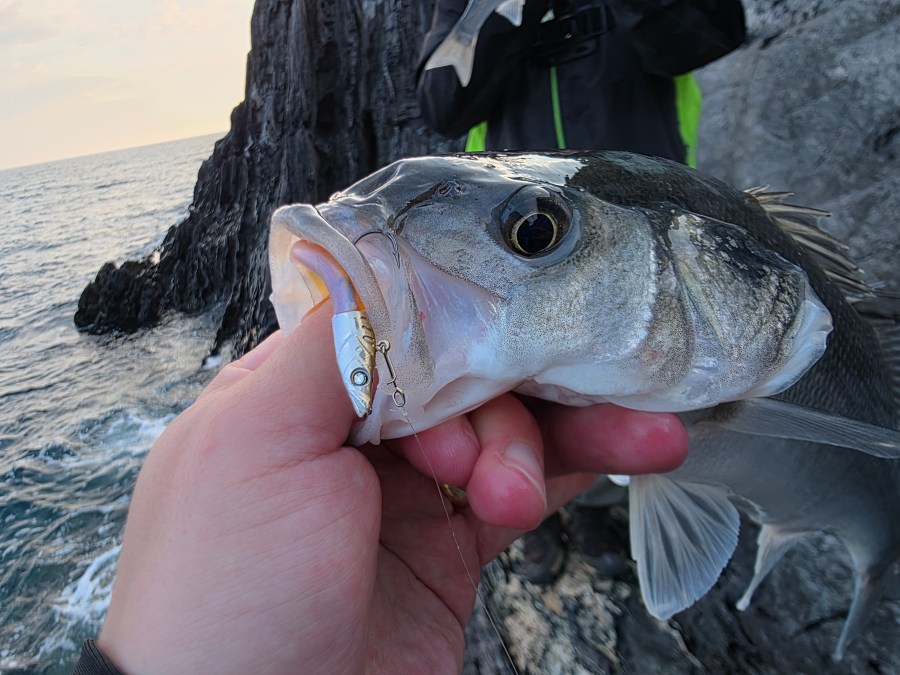
The darting technique is finding its audience in the UK, having been very successful in Japan and around the Mediterranean. In Japan, it is known as the ‘Wind’ technique: like winding your reel handle. It is really quite simple and can be scaled from LRF right up to our heavier bass rods. Using a jighead with an arrow-like head, normally an open hook, you rig a soft plastic with no paddletail. These can be quite blunt-looking soft plastic lures, with a triangular, flat-sided shape that lines up with the weight of the jighead, or longer, worm-style lures.
The darting technique is finding its audience in the UK, having been very successful in Japan and around the Mediterranean. In Japan, it is known as the ‘Wind’ technique
The aim is to flick the rod tip up sharply. This can be done in regular sweeps, pulses, and with long pauses; it all depends on where your targets are and how aggressively they are feeding. For bass, this technique is especially effective because of their speed and aggression. They are easiest to catch when they don’t have time to think about what they are chasing. The quick darting movements mimic a panicked fish and line up well with the evading moves of a distressed sandeel.
When bass are relaxed or slowly patrolling in large groups, they can be very tough to trick. Lots of time and lots of eyes make for very cautious fish. On the night I mentioned at the beginning of this article, when I was sight fishing for them in the shallows, they were ignoring all the larger lures we tried. I knew the darting technique could do the trick, so I put on an Issei Umitaro Micro Darting Prawn, which has the required triangular shape, and the fish immediately reacted to the darting action. Going light and being clever with the movement and presentation has tempted many bass for me over the years, and this was one of many situations that has proven the case.
CREATURE BAITS: THE SLOW-BURN OPTION
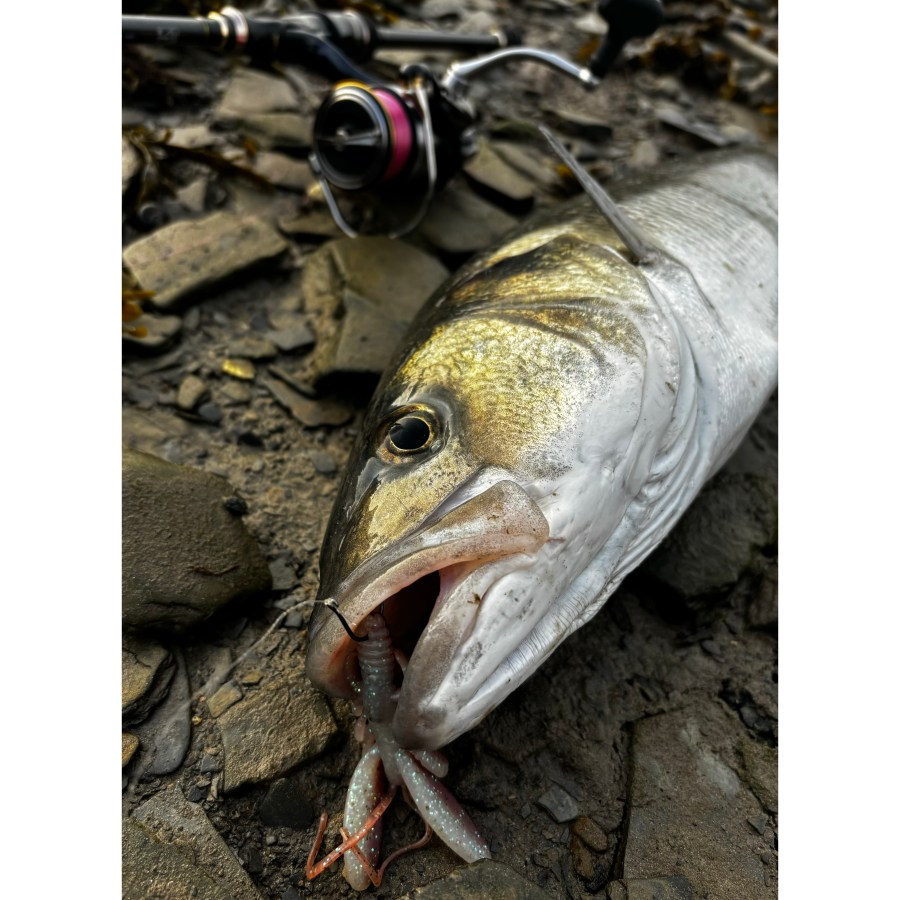
Sandeel, prawns and small baitfish aren’t the only food items available to a hungry bass in the spring, though there are also the crabs. The last couple of years have been dominated by the ever-growing obsession with catching bass on creature baits, usually far up estuaries in shallow water. The majority of the most successful creature baits (any lure that looks like a crayfish, crab or similar) are under four inches long. This gives the angler the best chance of tempting most bass that come their way, as the fish aren’t too put off by the size of the lure. And in spring this small size can make a big difference.
I am happy to admit I am no expert in this new creature-bait movement, but luckily I know some fantastic anglers who are. So I asked Josh Fletcher for his advice on how to get the best from these lures, and for some photos for this article showing the results. His first comment was, “If you think you’re working them slow, it’s not slow enough”. A huge element of this type of fishing is patience and trusting your lure and the fish’s ability to find it. He went on to advise that you need to keep as much contact with the bottom as possible. Keeping the lure low and slow and sometimes stopping to animate it on the spot without retrieving it, can be the difference between a catch and a blank. And don’t be afraid to fish small. Some of his better fish have fallen to two-inch lures on more than one occasion.
“If you think you’re working them slow, it’s not slow enough”.
Josh’s two favourite lures for this type of fishing are the Westin CreCraw in both the 6.5cm and 8.5cm models, and the Keitech Crazy Flapper 3.6-inch, a lure he describes as ‘absolutely lethal’. Neither of these lures is an exact copy of a crab or a squat lobster, but they sit in that perfect zone of imitating those prey items and even large prawns. Bass are inquisitive and will investigate these high-reward meals. They don’t have to chase; they simply ambush them. If you can’t get hold of those exact lures, look for quality soft-plastic creature-style lures with lots of moving parts. You want them to come alive with the slightest twitch. You rig them on jigheads, Texas rigs, Cheb rigs and more. Just don’t go too heavy, as you don’t want the weight dragging the lure down into the silt.
TACKLE THAT WORKS WITHOUT OVERKILL
Josh’s success carries on from early season right through, and he uses much heavier tackle than me. He prefers a shorter rod, ideally 7ft 6inches. His experience is that anything above 8ft can feel a bit awkward, and you can find yourself out of position. Being able to adjust a cast or slowly pivot on the spot with a shorter rod is much easier. He prefers rods with a more regular action, as a lot of the fish hit under the rod tip. A tight, fast rod doesn’t have the same shock absorption as something with a slightly softer blank, but it must have some backbone in the lower third to two thirds to set your hook.
I was interested in exactly which model he was using, and it’s currently the new Westin W6, rated 7-24g and 7ft 6in in length. He pairs it with a Shimano Twinpower C3000MHG reel loaded with 16lb Shimano Kairiki braid. You don’t need to go too heavy on braid for estuary fishing but aim for something around 15-16lb breaking strain. His last tip was to think about your leader. On bright, sunny days he’ll drop down to as low as 9lb to avoid spooking bass in the clear water. But if conditions aren’t too bright and clear, his usual choice is a 13.2lb breaking strain leader. This gives him a fighting chance to land some of the 60cm-plus brutes that patrol the upper estuaries.
Soft plastics are by far the most popular way to catch bass in the UK, thanks to their versatility. But it would be foolish to ignore the metal and hard plastic lures available in great variety. In deeper, fast-flowing water, I love the efficiency of a slim metal jig, such as a Major Craft Jigpara Micro Slim in 7g or 10g. The Aji colour is a great match for a sandeel.
When it comes to hard plastics, IMA is the king of the brands, but I have also had great success with the Savage Gear Gravity Pencil Slim 5g. It has a lovely wiggle on the drop and darts well with quick flicks of the rod tip. With all hard lures, treble hooks are often included, and if you are returning your fish, it’s wise to de-barb them or replace them with large singles.
However we catch them, the bass holds our attention like almost no other fish in UK waters. The quality of the flesh for eating, the chrome-like scales, and the blue spiky fins. Then there is that huge mouth, ready to eat anything it deems prey, yet entirely lacking what we would call teeth, instead having those tough, sandpaper-like jaws that are easy to grip. They are the quintessential UK gamefish, and I can completely understand the obsession with the species.
There are many opinions on whether catch limits/restrictions are working. But in my experience, I have seen improved numbers and larger sizes in my local area. So anecdotally, there appears to be some success. So it’s just a reminder for early season that from 1st February to 31st March the bass fishing is catch and release only, then only two fish per day after that. It may seem arbitrary, but I believe these controls are improving our fishing for these majestic fish. Long may that continue.