
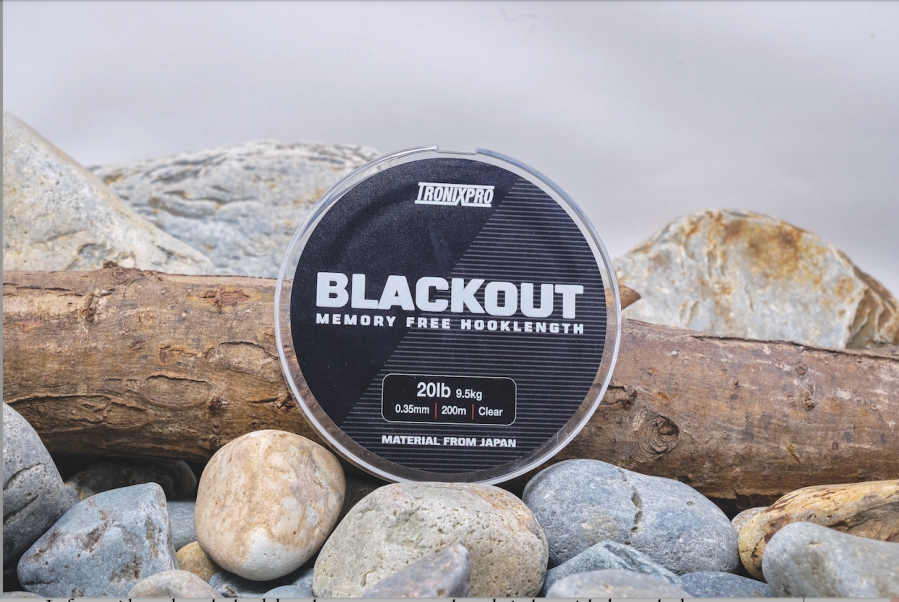
Hook lengths are something few anglers give enough thought to. Mike Thrussell explains how the correct choice of material and adjusting the lengths to suit conditions and target species will make a massive difference to your catches
MONO OR FLUOROCARBON?
Mono line, even in shorter sections, still has more stretch than fluorocarbon does. This can disguise shy bites in the finer diameter lines below 0.35mm. Its other disadvantage is that it is softer in character than fluorocarbon and this can lead to increased tangles, especially when fishing the surf tables, and far more so when fishing in rougher and shallower seas. The other important thing to consider is that mono is more prone to seabed abrasion and will show scarring when in contact with rougher mouthed species like huss and dogfish. Memory free mono is the best choice as it gives better presentation.
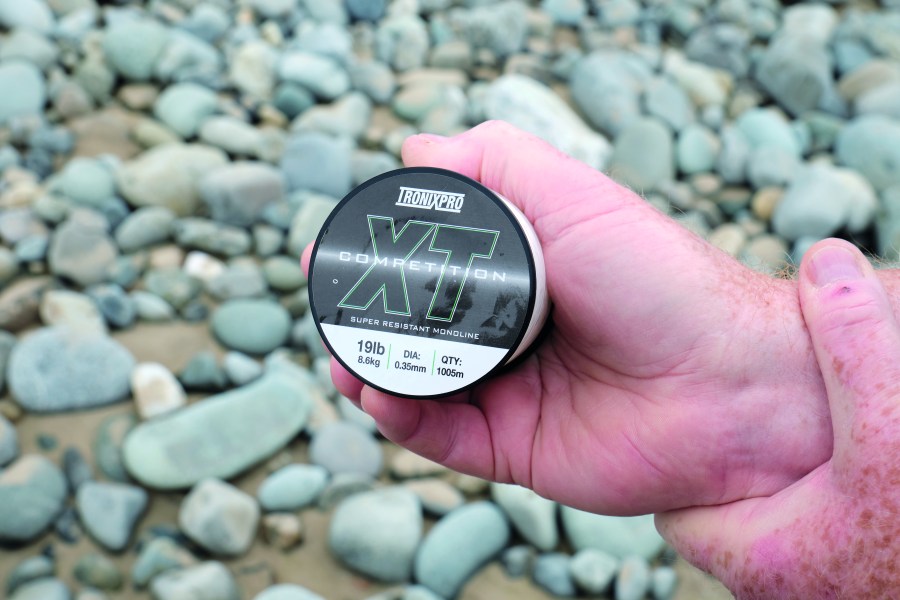
Fluorocarbon has moved on in recent years, and you now have the choice between softer and harder fluorocarbons. If you’re fishing over sand at close range, then you should consider the softer varieties in lighter diameters for improved bait presentation. Experienced lure anglers favour a softer fluorocarbon too, as it impedes the action of the lure less. When surf fishing or when fishing in rougher seas, choose a harder type which will offer greater abrasion resistance and, again, is less prone to tangling when a bait is tossed up and down in agitated, violent water. Although mono hook lengths will still catch plenty of fish, it’s hard to argue against fluorocarbon catching you more in virtually all circumstances. There’s an argument that mono is way cheaper. It is! But fluorocarbon lasts much longer before it needs changing and this negates any real cost influence.
HOOK LENGTHS FOR IMPROVED BITE DETECTION
It’s no surprise that generally we need to use longer hook lengths in calm conditions and shorter lengths in rougher seas to minimise tangles. More so to choose the right length that presents the bait correctly and conveniently for a fish to eat it. We don’t always realise just how much a bait will lift and fall when washed around in the surf. The hook trace inevitably effects the way a bait behaves and a bait that washes all over the place is harder to hit for a fish trying to eat it. A static predictable bait is going to be eaten more quickly.
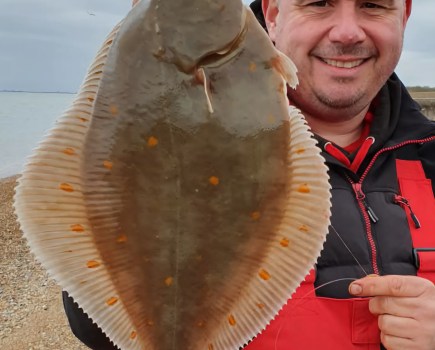
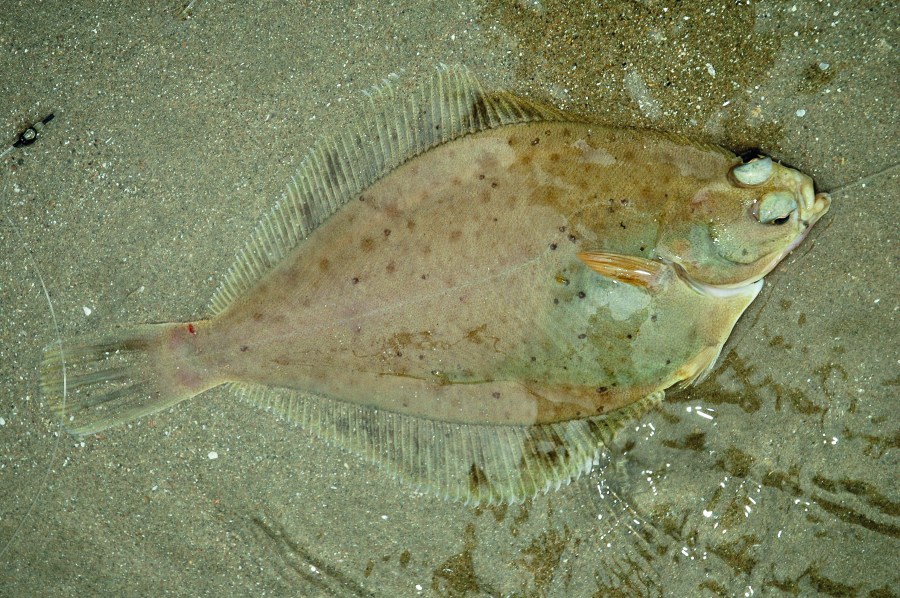
To give some examples, if you’re targeting flatfish in flat calm seas, then a longer 20-inch hook length of say 12 – 15lb line is going to give the bait movement and visuality in the final stages as a fish follows the scent trail to source. In a livelier sea, a 12-inch hook length keeps the bait tighter to the seabed where the flatties are feeding. In rougher seas, don’t be frightened to use a 6 – 8-inch hook length to keep the bait as tight to the seabed as possible. The shape of a flatfish tells us it prefers to eat their food when positioned flat on the seabed, as do rays, so bear this in mind when selecting a hook length. Make it easy for them to eat.
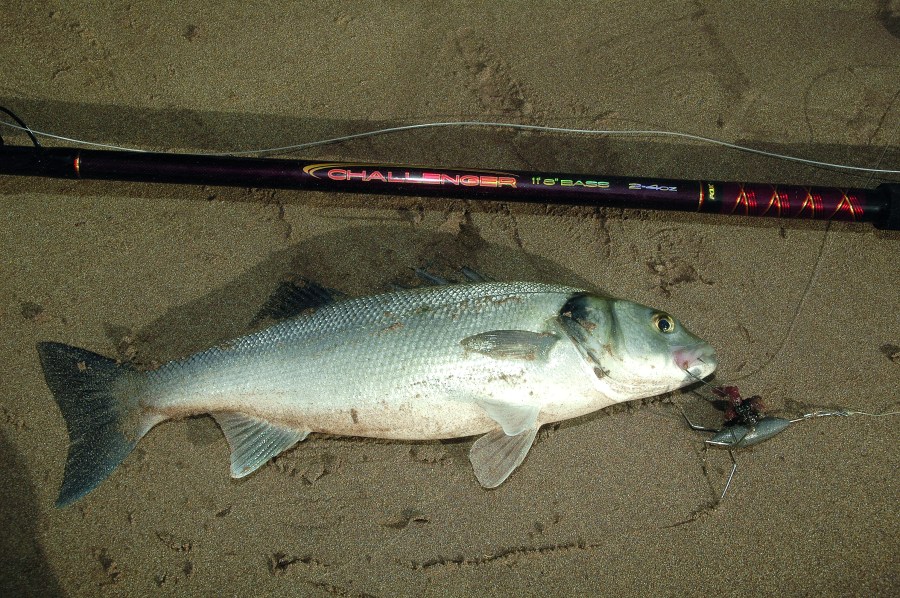
Moving on to round shaped species like bass and cod, we’re looking at fish that generally face into the tide using their scent detectors to pick up food smells, then swim into the tide until they locate it, open their mouths, suck the bait in, then instantly turn back in a downtide direction. This is why bites from bigger round fish hammer the rod over and pull the lead weight clean out. In a light tide run the hook lengths can be 18 – 20-inches long. This gives the fish the room to take the bait, turn and build up a little speed via the tide push to self-hook. In faster tides reduce the hook length to 15-inches which is a good all-round length to keep the bait a more static target but still give the fish room to self-hook.
You may have noticed that it’s easy to hit whiting when the tide is running but not so easy when the tide flow is easing? This is again because the whiting is following the bait’s scent trail, eating the bait and turning back with the tide flow creating enough inertia to self-hook. As the tide flow eases, if you lengthen a typical 10-inch hook length to 15-inches, you’ll keep catching as it gives the whiting more room to turn and self-hook against the lead weight.
If you’re targeting rays, you can generally leave your hook lengths around 18-inches in most conditions. A typical ray approaches a bait that might be washed side to side across the seabed, but swims over it and smothers it with its body before manoeuvring the mouth to the bait. This is why ray bites are often shown on the rod tip as quivers and weird rattles, then a pause, before the rod tip pulls over. The quivers and rattles are the wings of the ray hitting the line as it covers the bait. In fast tides and rougher seas, reduce the hook length to 15-inches to reduce bait movement and make it easier for the ray to eat.
TIPS AND TRICKS WITH MONO AND FLUOROCARBON
- Having some stretch and a softer nature, mono can be knotted using say a 5-turn Grinner knot. The same knot should suit most of the softer fluorocarbons too. Harder fluorocarbons are typically just as strong using just three or four turns of line within the knot due to its stiffer nature.
- With all knots always wet the still to be closed knot with saliva. Better still, coat with Lip Salve and draw the knot together slowly making sure all the turns close neatly. You hear lots of horror stories of anglers losing fish to weak knots. Invariably, this is due to not lubricating the line prior to closing the knot and pulling the knot together too quickly causing friction burns. If you gently run fluorocarbon along its whole length through your fingertips a few times to induce heat into it this helps it not only lay straight, but it will knot better too.
- The tag end of a fluorocarbon knot, with care, and while shielding the main line section, can be gently blobbed with a lighter. This creates a neat closure and limits any chance of the knot slipping under heavy pressure. This works especially well on heavier diameter lines over 20lb, and with heavy duty conger and common skate traces.
- If you re-use a fluorocarbon hook length, after checking it for any abrasion, clean the whole length with a soft microfibre cloth with a little washing up liquid on it. Fluorocarbon can collect surface dirt and residue. This can cause the hook trace to glow, which in clear shallow water may be visual to fish as they approach the bait.