
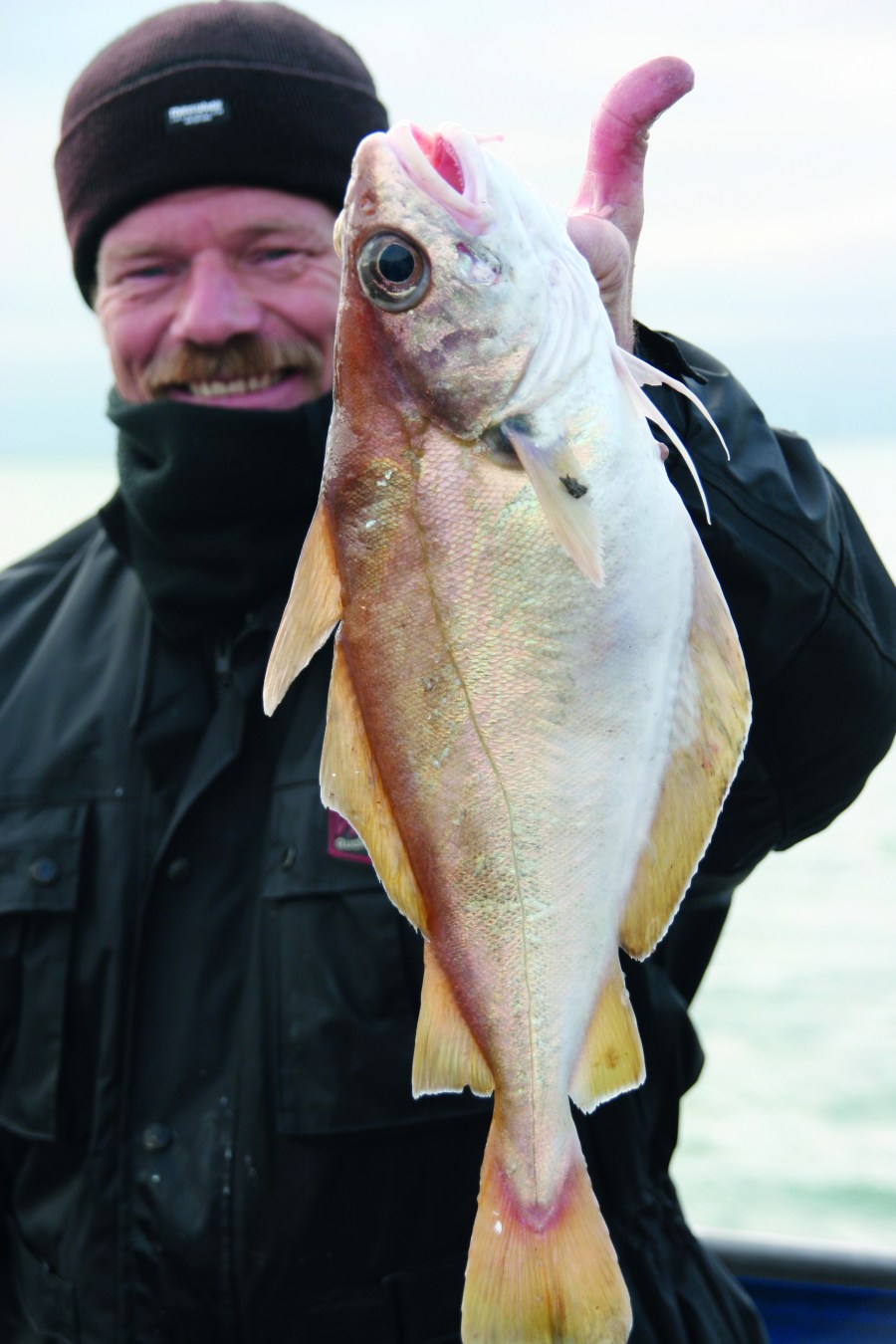
Don’t dismiss the lowly pouting – a five-star bait for cod, conger, bass and rays this winter
- Live baiting: If possible, use a portable air-pump aerator, otherwise keep your live pouting (not too many) in a bucket of water which you should oxygenate every 10 minutes by vigorously hand-stirring the water or replacing with fresh seawater.
- Use a treble: Pouting have a tendency of coming off the hook when they are lightly hooked through the top lip. If you are using them as live baits it’s therefore better to use a treble hook just below the first dorsal fin. This allows the bait to swim more naturally and generally keeps the pouting more lively.
- Float tactics: Float fished live pouting from a pier can catch huge double figure bass. Use a sliding float rig with a Power Gum stop-knot on the line above the float so that the depth the pout is swimming at can be adjusted as the tide changes.
- Bait sliders: Use a live-bait slider rig or clip swivel and your live pouting bait will last longer. These work well off structures such as piers or harbours etc but are not as effective when beach fishing.
- Lob cast: If casting a pout live bait, limit the distance of your cast. Pout are very fragile and it’s better, if possible, to lower the bait into the water to avoid stunning or damaging it during the cast.
- Barotrauma: When you think you have caught a pouting and intend using it for live baiting, be gentle on the retrieve, don’t haul the fish in too quickly since pouting brought up from depth are frequently damaged by pressure changes.
- Fragile: Whenever you handle the live bait, try and do so by covering you hand with a wet cloth. If your live bait is bleeding, dispatch it humanely and use it as dead bait instead.
- Watch your rod tip: After casting out your live bait, keep watching your rod tip to familiarise yourself with the way the live bait influences the movement of your rod tip. You will then better recognise when a predator takes the live bait, particularly if it’s just a gentle take. However, more often than not, you will be left in no doubt when your live bait falls spectacularly to a large predatory fish!
- Dead baits: Dead pouting are an effective, favourite bait when fished on the seabed particularly for conger eel, rays, cod, bass and top. Alternatively, fishing a pouting on relatively weightless tackle so that it drifts just below the surface frequently entices bass and pollock with considerable success.
- Don’t strike too soon: When a predator hits the live pouting, allow it to swim away hard and fast to begin with and give it time to properly take the baited. Aggressive predators attack live fish head-on, so it’s best to allow time for it to take the pout into its mouth before setting your hook.