
For many sea anglers, garfish are little more than a colourful summer diversion – something to catch while waiting for mackerel, or entertaining youngsters on a harbour wall. That does them a serious disservice. Properly targeted on balanced tackle, these visual predators offer some of the most exciting light-tackle sport available from our shores. Paul Quagliana explains why it’s time experienced anglers looked at garfish very differently
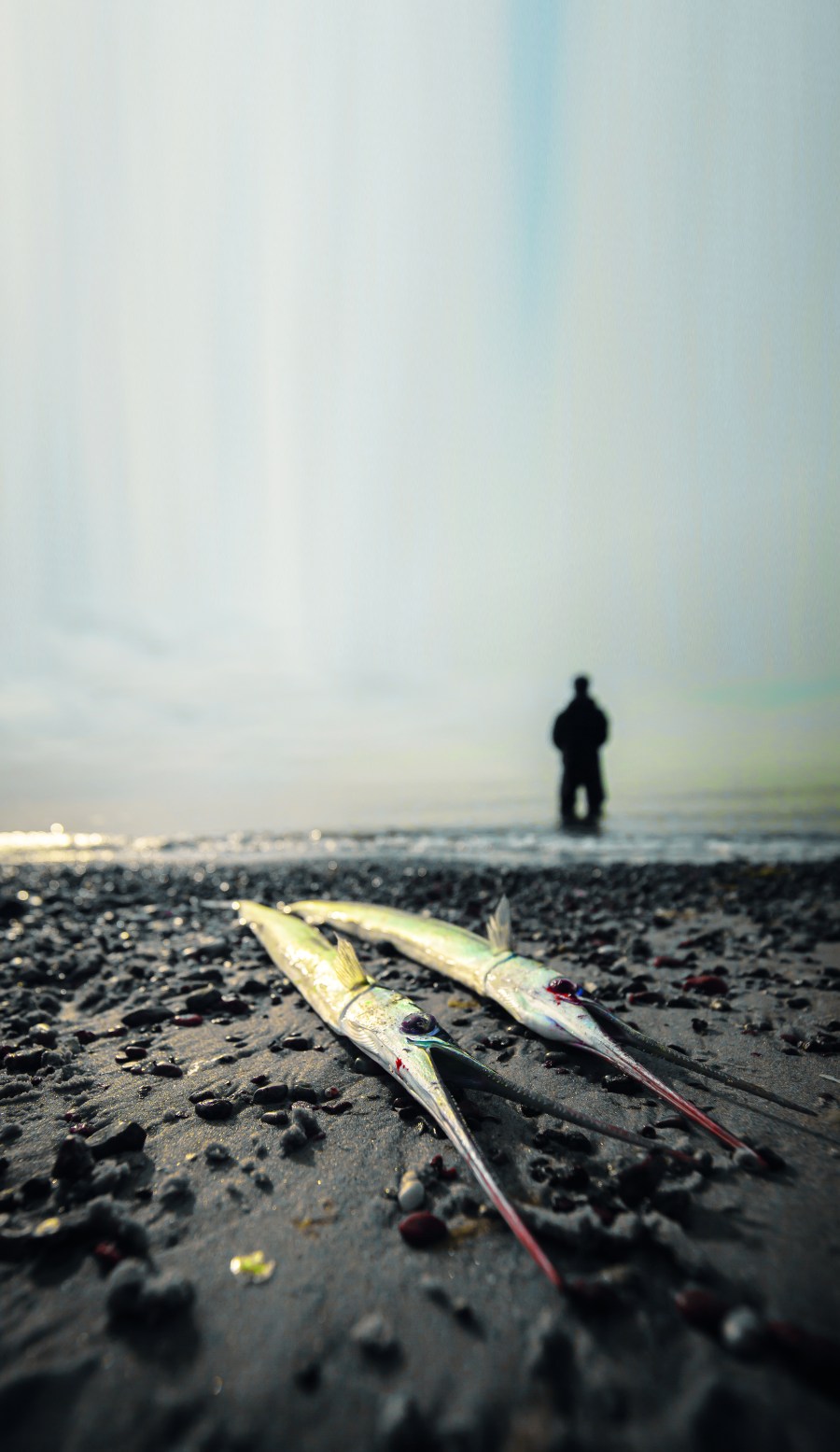
The UK’s seas support a remarkable variety of sporting fish, all pursued by wildly different methods, each with its own quirks, frustrations and rewards. Among them, perhaps no species is more consistently underestimated than the garfish. That may sound a bold claim. For many anglers, garfish occupy an odd niche: a summer curiosity, a fish associated with holiday piers, dangling floats and strips of mackerel. Fun, certainly – but hardly serious. That perception misses the point entirely.
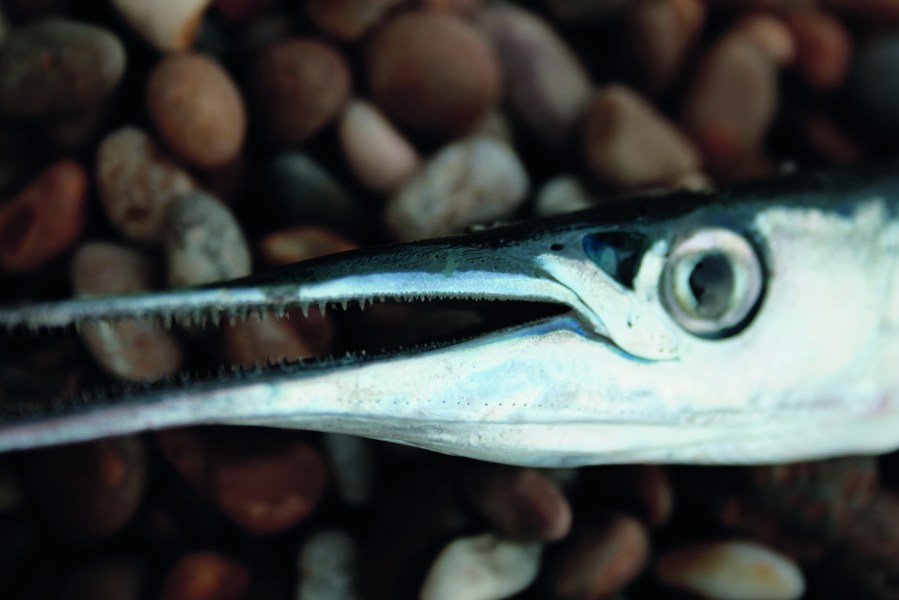
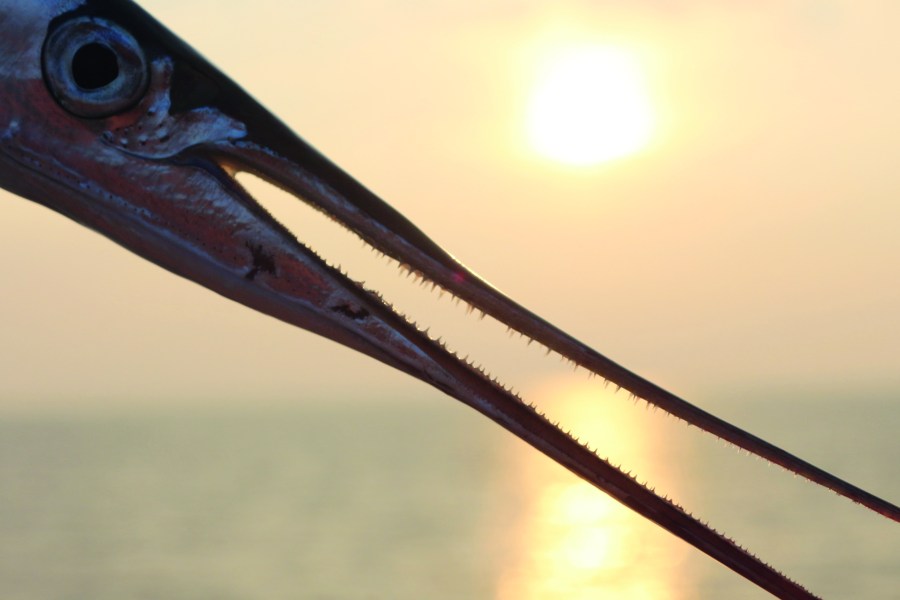
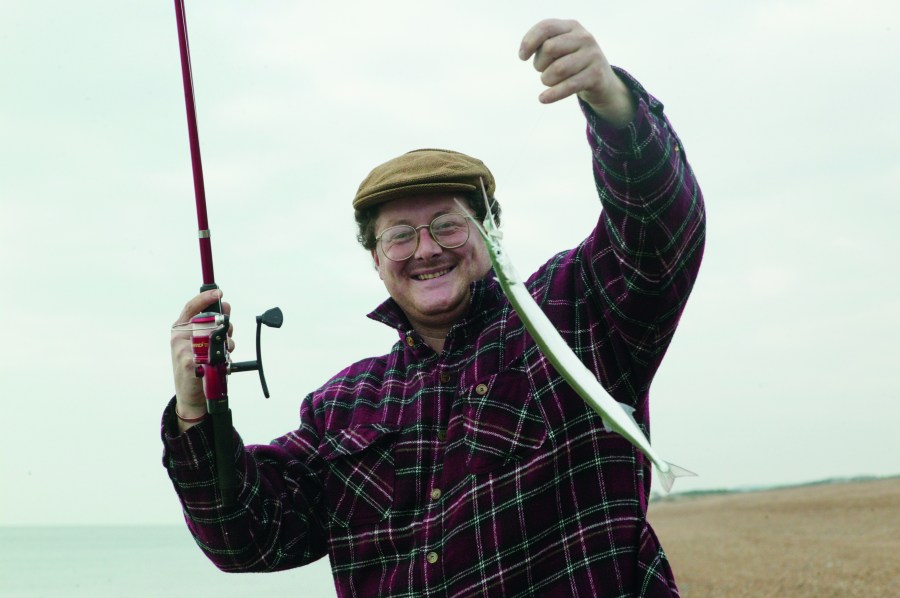
When I caught my first garfish around 25 years ago, it felt like meeting a creature that had somehow escaped from the angling books of childhood. Long, sinuous, almost exotic in appearance, with that unmistakable beak and a tendency to cartwheel spectacularly across the surface when hooked, it immediately struck me as something rather special. On appropriate tackle, it still does.
There is a reason garfish have earned the nickname mini-marlin. Hook one on balanced tackle and the comparison makes immediate sense. They leap. They tail-walk. They shake their heads violently. They slash across the surface with real intent. Pound for pound, few readily available UK species offer quite such visual sport. And unlike many species, garfish reward observation.
They are not simply opportunistic feeders that blunder into any bait placed in front of them. They are visual predators – mobile, curious and often frustratingly selective. That makes them far more interesting than many anglers give them credit for.
Their appearance has inspired countless nicknames: greenbones, sea needle, sea snipe, mackerel guide. In Denmark, where they are highly regarded as food fish, they are known as hornfisk. Their cooked bones famously turn an extraordinary turquoise-green, making them one of the more unusual fish likely to grace a dinner plate. But for many experienced anglers, the table is beside the point. The real appeal is sporting. Once you stop viewing garfish as incidental by-catch and start treating them as a deliberate target, the game becomes much more interesting.
WHY MOST ANGLERS GET GARFISH WRONG
Part of the issue is familiarity. Because garfish are common, visible and relatively easy to catch in straightforward conditions, many anglers mentally file them alongside beginner species. That’s unfair.
Yes, they can be simple to catch. But that doesn’t mean they are simplistic fish. Spend time actually watching their behaviour and you quickly notice patterns that separate successful anglers from those simply hoping for random takes. They follow. They inspect. They refuse. They respond to movement changes. They often react to disturbance. And crucially, they can become highly specific in what they want. That makes them tactically fascinating.
WHAT ACTUALLY TRIGGERS A TAKE?
This is where the conversation becomes more interesting for experienced anglers. Basic advice says present a bait beneath a float and wait. That works. But understanding why fish take – or refuse – delivers much greater reader value. One of the most revealing behaviours is following.
Anyone who has targeted garfish with lures will have seen it: fish materialising from nowhere behind a lure, tracking it intently, sometimes all the way to the rod tip, before peeling away at the last moment.
That behaviour tells you a great deal. First, you know fish are present. Second, they are clearly interested. Third, something about the presentation is not quite convincing enough. That is extremely useful information.
Oversized metals are a classic example. Heavier lures cast beautifully, but I have repeatedly found garfish reluctant to fully commit to them. They will follow persistently, seemingly fascinated, but refuse to strike decisively.
Scale clearly matters. So does descent. Many successful takes come not during steady retrieve, but on the pause—particularly when a lure flutters naturally downward like a wounded baitfish.
That makes perfect sense. Garfish are visual hunters feeding largely in the upper water layers. A flashing object dropping erratically suggests vulnerability. A lure dragged mechanically at constant speed can look artificial by comparison. Similarly, sudden movement changes often provoke reaction strikes. A rapid acceleration. A pause. A directional shift. Even surface disturbance.
One simple but revealing trick involves abruptly retrieving a float setup for several yards before stopping dead. The splash, disturbance and sudden bait movement often trigger immediate interest.
That is not luck. It reflects predatory response. Experienced anglers should think less in terms of static rig mechanics and more in terms of behavioural triggers. That shift in mindset transforms the sport.
THE MODERN GARFISH GAME
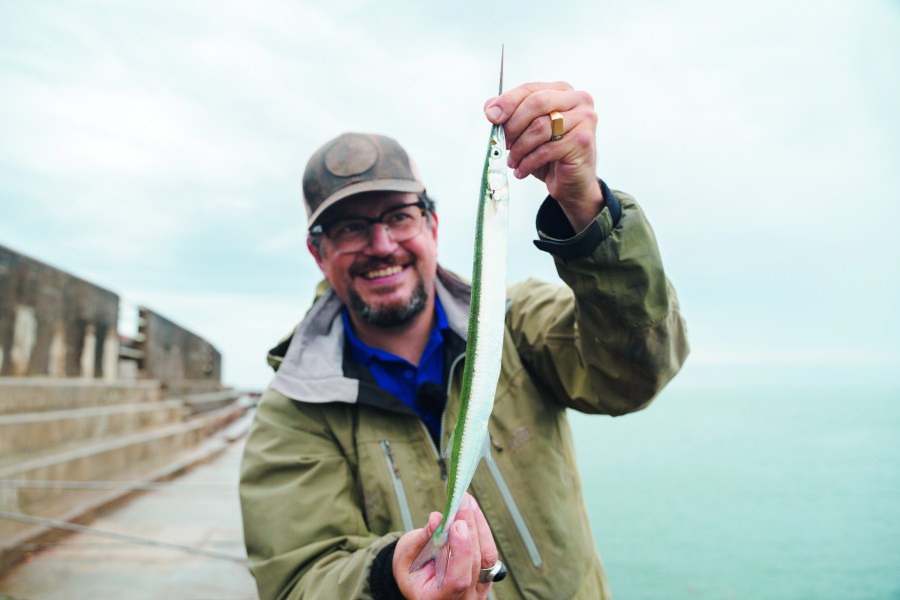
Perhaps the biggest change in garfish fishing over the past decade has been the rise of lure fishing. Historically, most anglers encountered garfish while float fishing with strips of mackerel or sandeel. Those methods remain highly effective, but modern lure tactics have revealed just how aggressive and visual these fish can be.
In many ways, garfish are perfectly suited to today’s lighter tackle approaches. Their preference for the upper layers of the water column, willingness to chase, and spectacular fighting style make them ideal quarry for light lure rods and LRF-style tactics.
The key lesson, however, is that smaller is usually better. Off harbours, piers and deep-water marks where extreme casting distance is unnecessary, tiny metal lures can be devastating. The most successful are often those that sink slowly rather than plummeting through the water column.
The retrieve itself rarely needs to be complicated.Cast out, allow the lure to flutter down briefly, then lift it back towards the surface with a slow sweep of the rod. Pause. Let it fall again. Repeat.
The important thing is not the retrieve speed but the change of speed. Time and again, garfish reveal their interest during the drop. That fluttering descent appears to mimic precisely the sort of vulnerable prey item they are designed to exploit.
When larger metals are required to achieve distance, a common pattern emerges. The fish follow enthusiastically but fail to commit. It can be infuriating, particularly when several fish repeatedly appear behind the lure only to disappear at the last second.
Yet even this is useful information. A follow is evidence. It tells you fish are present and engaged. More often than not, the answer is to scale down rather than fish harder. A smaller lure, a slower sink rate or a longer pause often transforms follows into hooked fish. For experienced lure anglers, this should sound familiar. Bass, pollack and even trout frequently respond in the same way. The principle remains identical: when predators show interest but refuse to commit, the presentation usually needs refinement rather than repetition.
THINKING IN THREE DIMENSIONS
One of the most common mistakes when targeting garfish is assuming they are always right on the surface. They certainly spend much of their time there, but feeding fish often move through a surprisingly broad vertical range. Many anglers become trapped by habit, repeatedly fishing the same depth because it worked previously. The better approach is to treat depth as another variable.
If fish are present but reluctant, altering presentation depth can produce dramatic improvements. This is especially noticeable around harbours, breakwaters and deeper rock marks where baitfish may hold several feet beneath the surface. What appears to be a surface-feeding species is often operating slightly deeper than anglers realise. That is one reason fluttering lures and naturally descending baits work so effectively. They spend longer travelling through the zone where garfish are actively searching. Experienced anglers are constantly asking themselves one question: Where in the water column are the fish feeding today? Answer that correctly and everything else becomes much easier.
THE MOST SPORTING WAY TO CATCH THEM?
If there is one method that deserves far more attention than it receives, it is fly fishing. Some of the first garfish I caught after moving to Dorset came while fishing a fly rod from Chesil Beach using a slick of oily groundbait to attract fish. It remains one of the most enjoyable ways to target them.
The combination of visual takes, light tackle and aerial fights feels perfectly suited to the species. Like many successful forms of sea fly fishing, the method relies on creating interest rather than waiting for fish to stumble across a bait. Garfish respond exceptionally well to oily attractants. Chopped fish, old bait and fish oils all create a scent trail that can draw fish into range and keep them there. Once a slick develops, the water often comes alive.
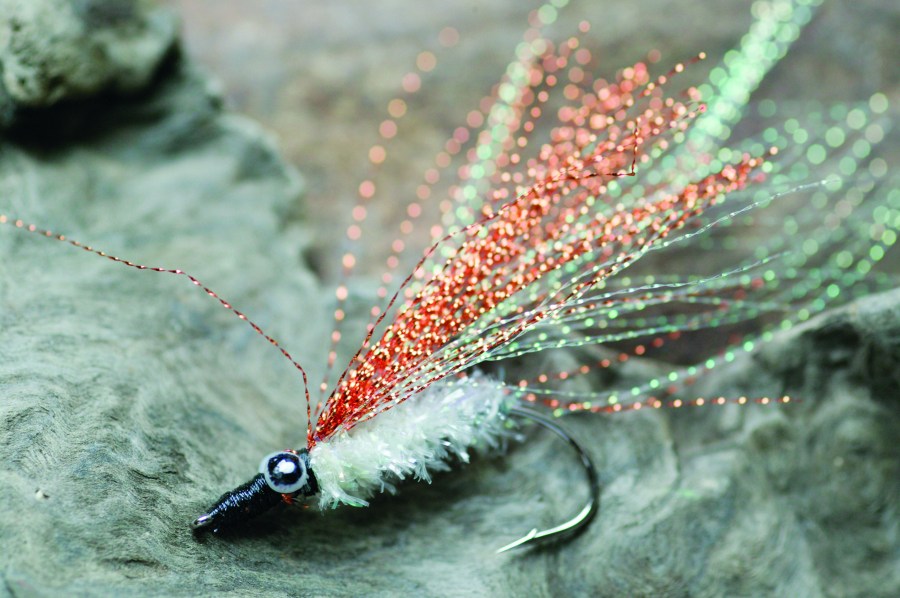
The approach is wonderfully active. Rather than staring at a float, you are searching, casting and observing. Simple flies are usually all that is required. White, silver and lightly dressed baitfish patterns have proven consistently effective. A little flash helps. A touch of red often seems beneficial. The exact pattern matters less than many anglers imagine. Presentation remains king.
The real attraction of the method is that it allows anglers to experience garfish at their most sporting. Every leap, run and headshake is transmitted directly through the tackle. For anglers accustomed to bass on fly tackle, garfish offer a surprisingly addictive summer alternative. And because they often arrive in sizeable shoals, action can be remarkably consistent once fish are located.
A SPECIES BUILT FOR EXPERIMENTATION
One reason garfish remain such an enjoyable target is that they reward curiosity. Unlike some species that respond best to rigidly established methods, garfish seem to encourage experimentation. That is particularly true when considering some of the more unusual techniques used around the world.
Perhaps the most fascinating example comes from the Solomon Islands, where local fishermen traditionally target garfish using loops of spider silk suspended beneath small kites. The principle is brilliantly simple.
Rather than hooking the fish conventionally, the garfish’s teeth become entangled in the silk fibres when they attack. It sounds extraordinary, yet it works. Modern commercial versions known as “silk hooks” are available in parts of northern Europe, particularly Denmark where garfish enjoy a far higher profile than they do in Britain. Could they work here? Almost certainly. Would they appeal to every angler? Probably not. But they demonstrate something important about garfish. They are a species that invites innovation.
THE LAST FRONTIER?
For all the attention given to shore-caught garfish, one avenue remains surprisingly underexplored. Offshore fishing.
Years ago, I remember reading that the boat-caught record might be one of the more vulnerable sea angling records simply because so few anglers deliberately target garfish at sea. Whether that remains true is open to debate, but the principle remains intriguing. Most boat anglers encounter garfish accidentally while fishing for something else. Very few actively pursue them. That feels like a missed opportunity. Imagine a calm summer day. Four light rods fishing tiny lures behind a slowly moving boat. Clear water. Bright sunshine. Surface activity.
The concept sounds less like conventional UK sea fishing and more like scaled-down big-game angling. Yet the comparison is not entirely ridiculous. After all, garfish already possess many of the qualities admired in classic pelagic sportfish. They are fast. They are visual. They jump spectacularly. And they often travel in groups.
Targeted trolling with tiny plugs or metals remains largely unexplored territory in British waters. That alone should appeal to anglers who enjoy discovering something new. In an era when so much sea angling information has become standardised, finding genuinely fresh ideas is increasingly difficult. Garfish still offer that possibility.
CONCLUSION
Perhaps that is the greatest argument for taking garfish more seriously. Not because they are rare. Not because they are difficult to catch. But because they remain interesting. The best sea angling species continue to reveal new lessons no matter how many years we spend pursuing them. Garfish fall firmly into that category.
Look beyond the holiday-pier stereotypes and a very different picture emerges: a highly visual predator that rewards observation, finesse and experimentation.
Catch one on balanced tackle and you’ll understand immediately why generations of anglers have compared them to miniature billfish.
The next time a shoal appears beneath a harbour wall or starts slashing through baitfish along a rocky headland, resist the temptation to treat them as an afterthought. Instead, give them your full attention. You may discover that one of Britain’s most overlooked fish is also one of its most entertaining.
FIVE ADVANCED GARFISH LESSONS
- Follows are valuable information: If fish repeatedly follow but refuse, change lure size or sink rate rather than simply casting again.
- Pauses often outfish retrieves: Many takes occur as a lure flutters downward.
- Disturbance can trigger aggression: Splashing floats and sudden lure acceleration frequently provoke reaction strikes.
- Depth matters more than most anglers think: Don’t assume every fish is feeding directly on the surface.
- Fish the conditions, not the calendar: Clear water and settled weather often outperform any particular tide state.
THREE GARFISH CHALLENGES FOR THIS SUMMER
- Catch one on a fly rod: Arguably the most sporting method of all.
- Try ultra-light lure tactics: micro-metals and slow-fall presentations reveal just how visual garfish really are.
- Target them from a boat: Tactics such as trolling small lures present a largely unexplored opportunity that could produce exceptional sport.